Staying in Your Lane
A Modern Guide to Self-Leadership in Chaotic Times.

What does self-love—or self-leadership—actually look like to you? And are they even different things?
In a world where our phones ping more than a microwave and workplaces expect Olympic-level performance as standard, how on earth are we meant to lead ourselves through adversity?
Does it depend on the timeline? The life stage? The frequency we’re vibrating at? Gender? Planetary alignment? (Kidding… mostly.)
Self-love, much like humans themselves, is completely bespoke. It’s as individual as fingerprints—or the way menopause can feel like a 300mph collision for some women while others suddenly sprout wings. And let’s not leave men out of the fun; mid-life crises come with their own delightful plot twists. A little red sports car, anyone? Or the classic ego-boosting “younger model” phase? Bless.
The media, of course, loves to whisper (or shout) that if you haven’t achieved a specific milestone by a specific age, you’re somehow behind. Spoiler alert: it’s stereotypical garbage. For me, every day is a fresh start—a new chance to think clearly without tumbling down the white-rabbit hole of consumerism. Spend more, be less? No thanks. Each day is an opportunity for accountability: What does self-love look like for me today?
Just the other morning over coffee, my girlfriends and I were cracking up about the nonstop advertising machine—from billboards to gym screens to “eat me” posters in fast-food chains—all of it screaming subtle messages that you are not enough. We’ve now nicknamed it “the boogieman”—the gatekeeper of distraction, pulling humans away from their own autonomy.
And here’s what years of travel, research, writing, teaching, and life have shown me:
Truth is simple. Universal. Free.
There’s no price tag attached to the stuff that actually matters.
From Liverpool classrooms to ashram floors across the world, I’ve learned that resilience—at least in the way modern workplaces use the word—is no longer enough. Too many environments (hello, healthcare across the Northwest of England and beyond) confuse resilience with “just keep going,” as though the human nervous system is some endless battery pack that never needs recharging.
Psychologists now call this toxic resilience: the harmful overfunctioning that looks strong on the outside while you’re quietly crumbling on the inside. This culture breeds silent suffering and self-neglect. And the cruel irony? The strongest-looking humans are often the ones at most risk.
We’re not machines. We have limits. Ignore them long enough, and the cost always comes due.
But the beauty? Like a bottle of Tipp-Ex for the soul, we can always course-correct—if we can hear that quiet inner voice. That requires stillness. Aloneness. A deeper level of self-love, or self-leadership, depending on the label you prefer.
Most people aren’t broken—they’re simply stuck in a cobweb of repetitive negative thoughts, spinning on the mental hamster wheel without the tools to get off. In a world this fast, the real skill is knowing when to pause.
So ask yourself:
What signals—mental, emotional, physical—tell me it’s time to hit the self-love button?
And more importantly,
Do I actually listen?
Burnout isn’t hiding. It’s in our homes, our workplaces, and woven into organisational culture. Leadership today requires an entirely new fluency—one that includes emotional load, stress, digital overwhelm, hybrid teams, cross-cultural complexity, and good old-fashioned human exhaustion.
So you can imagine my joy landing in Business Bay, Dubai, to connect with people who get it—leaders who think with both head and heart. An empowering, women-celebrating afternoon with fierce, driven advocates for resilience across public and private healthcare and education—from the UK and Europe to the Middle East.
What struck me most?
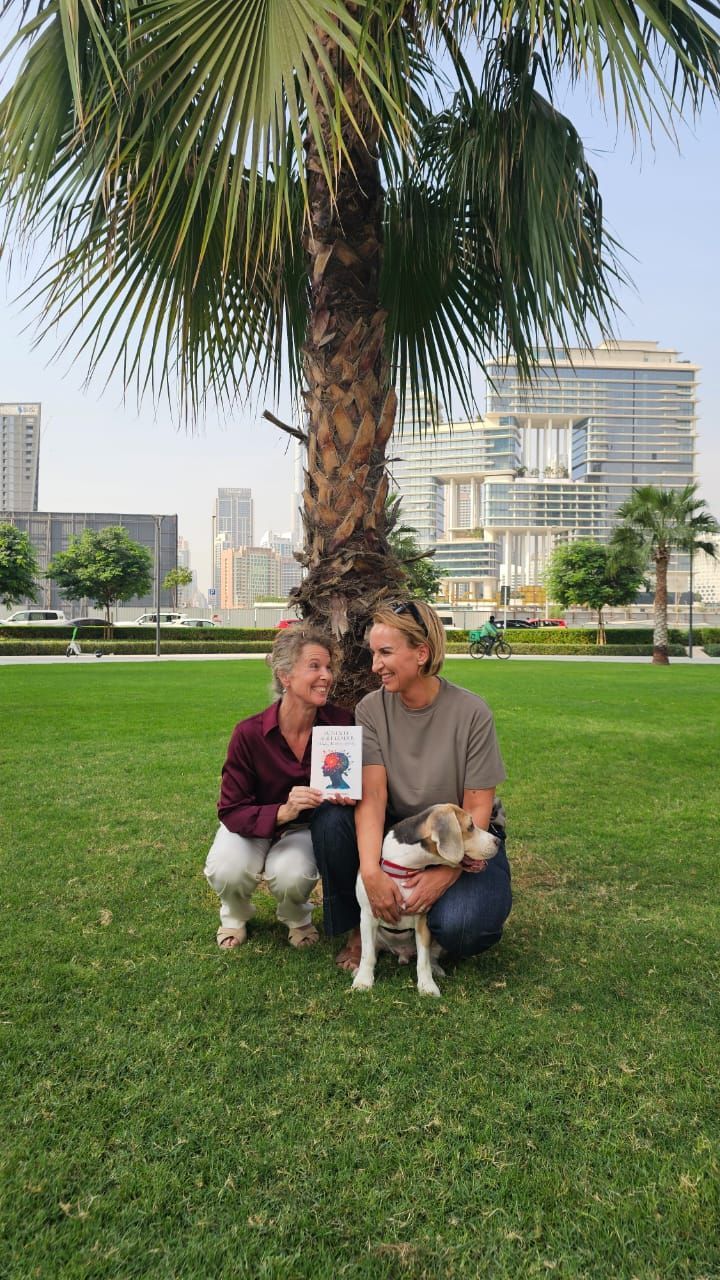
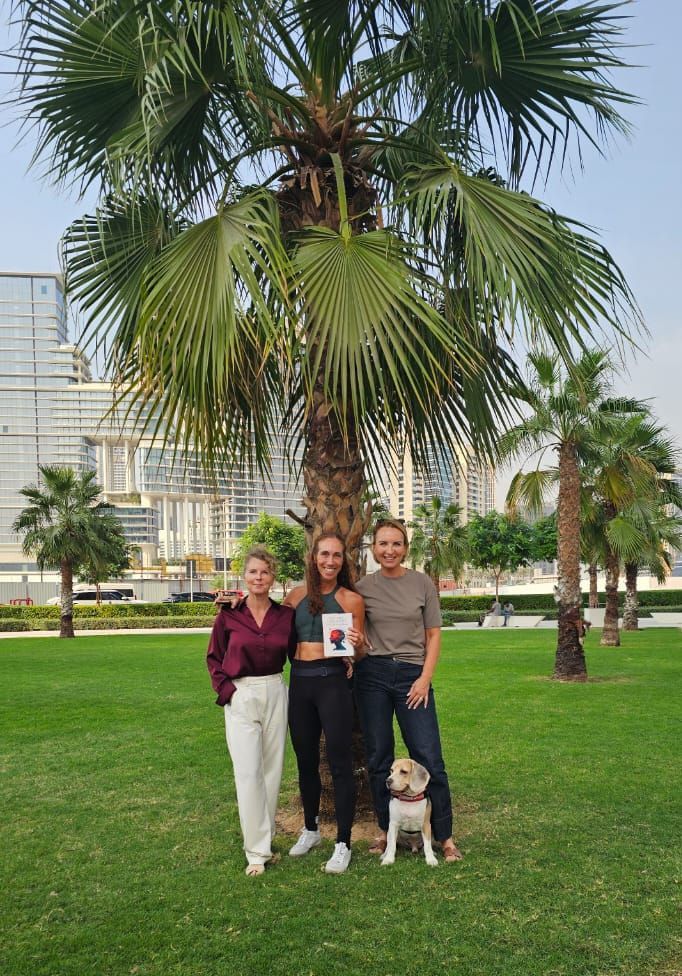

Whether it’s the overworked NHS nurse, the exhausted doctor in a UAE clinic, or any frontline worker anywhere on the globe, the invisible pressures are the same. The “hero” narrative has become a societal expectation—one that desperately needs rewriting.
So how do we rewrite it?
We shift from heroism to humanity.
I can’t wait to dive deeper into a book close to my heart when I’m in India next week. When I asked the author and Mental Agility expert, Magda Snowden, about her mantra, she said simply:
“Stay in your lane.”
A perfect summation of what human-centred, compassion-driven leadership really is.
There’s nothing quite like the power of likeminded women with stories to tell—women who uplift, transform, and create genuine change. Together, we cultivate mental agility, emotional literacy, confidence, and boundaries. We shift from survival mode to intentional thriving.
Because rest is not a reward.
Asking for help is not a weakness.
They are part of being human.
Magda’s book offers a blueprint for leaders ready to trade burnout for balance, pressure for presence, and heroism for humanity.
Mental Agility Leader: Unlocking the Human Advantage by Magda Snowden.
Share this Article